Safety Helmet Colour Code in India: Industrial Guide

Safety helmets are essential personal protective equipment in construction sites, factories, warehouses, mines, and infrastructure projects. When selected, fitted, used, and maintained correctly, they help protect workers from falling objects, impact, and other workplace hazards.
Helmet colors serve a different purpose: quick identification. A consistent helmet colour code in industry can help workers recognise supervisors, safety personnel, technical teams, and visitors, improving site communication and emergency coordination.
India has a product standard for industrial safety helmets, but no single national colour-to-role system is followed by every workplace. Most organisations use commonly recognised colour conventions and adapt them to their own safety policy.
What Is the Helmet Colour Code in Industry?
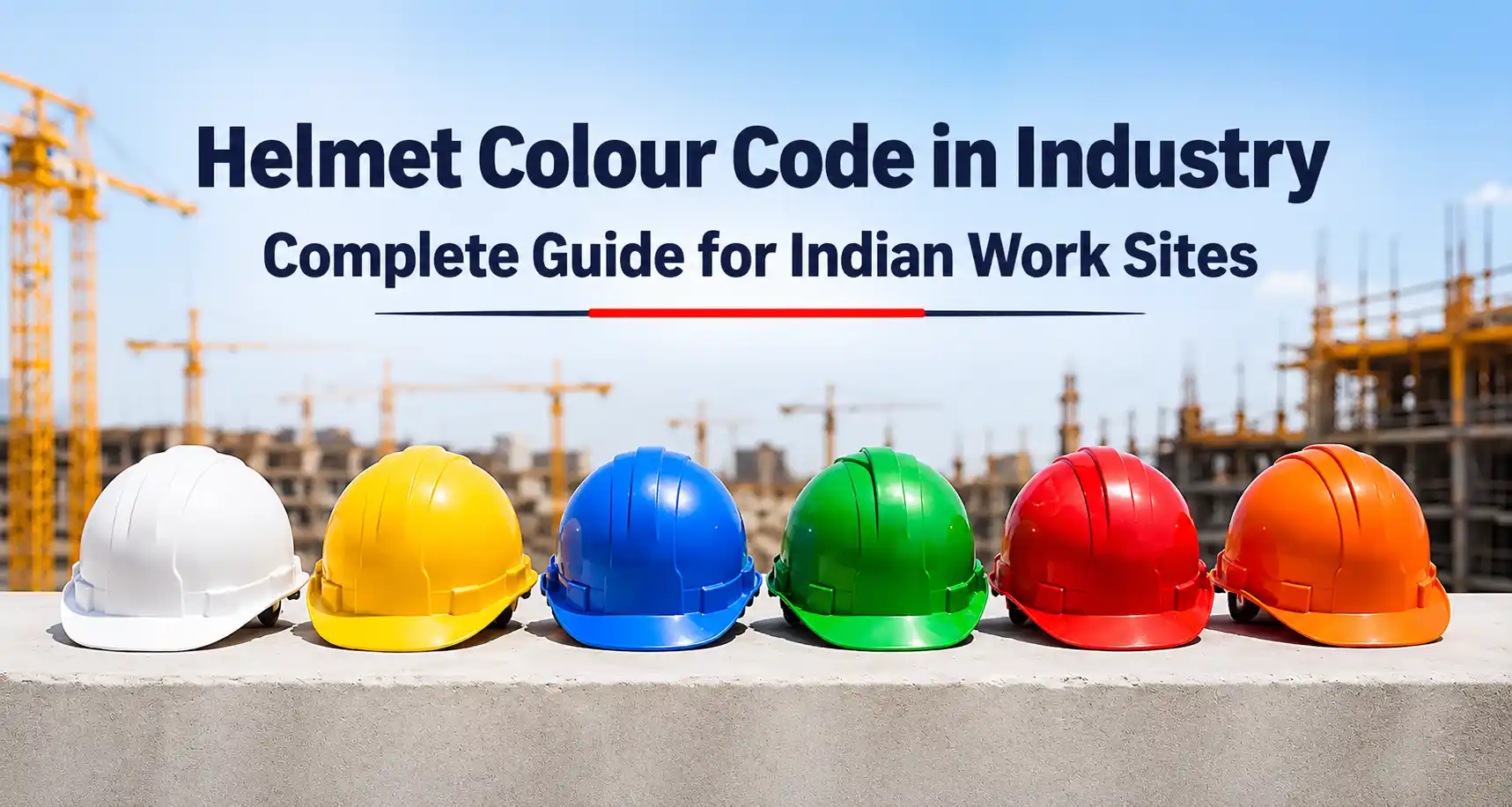
A helmet colour code is a workplace identification system that assigns helmet colours according to roles or responsibilities. For example, a site may use white for engineers, yellow for workers, and green for safety officers.
The purpose of a color code for helmet safety is to
- Identify workplace roles quickly
- Improve communication across large sites
- Locate safety and emergency personnel faster
- Distinguish employees, contractors and visitors
- Support supervision and access control
This system is common across construction, manufacturing, mining, logistics and infrastructure projects. However, colour alone does not provide protection or prove a person’s competence. It should support – not replace – identity cards, induction, training, and emergency procedures.
Standard Construction Helmet Colour Code Explained
The following table shows helmet colours and designations commonly used on Indian worksites. It is an indicative guide, not a mandatory national code.
| Helmet Colour | Typical Designation |
|---|---|
| White | Engineers, managers, supervisors or architects |
| Yellow | General workers, labourers or machine operators |
| Blue | Electricians, technicians, carpenters or skilled workers |
| Green | Safety officers, HSE personnel or environmental officers |
| Red | Fire marshals or emergency response personnel |
| Orange | Traffic marshals, signal personnel or high-visibility roles |
| Brown | Welders or workers involved in heat-related operations |
| Grey | Trainees, temporary personnel or visitors on some sites |
The exact construction helmet colour code varies between companies and projects. One organisation may use grey for visitors, while another may issue a different colour or a clearly marked visitor helmet.
Every company should therefore maintain a documented PPE colour policy and display its approved chart at site entrances, induction areas and safety noticeboards.
Which Colour Helmet Does a Safety Officer Wear?
Green is commonly used as the safety officer helmet colour on construction and industrial sites. It helps workers quickly locate safety officers, HSE team members or inspectors when they need guidance or must report an unsafe condition.
Some organisations use white helmets with green reflective stickers, bands or role labels instead. Green may also represent first-aid personnel, environmental teams or trainees at certain sites. The company’s documented PPE policy – not a general online chart – should be treated as the final authority.
Is There an Official Safety Helmet Code in India?
The Bureau of Indian Standards lists IS 2925:1984 – Specification for Industrial Safety Helmets (Second Revision). The BIS product manual covers requirements and tests for helmet construction, shock absorption, penetration resistance, flammability, electrical resistance, water absorption, and heat resistance.
Buyers should select an appropriate BIS-certified helmet bearing the Standard Mark under a valid licence and verify that it suits the site’s identified hazards. Colour should never be prioritised over protective performance, correct fit or condition.
IS 2925 addresses the safety helmet as a protective product; it does not prescribe a universal colour for each job designation. Therefore, the industrial helmet colour code is generally established through company or project policy. Many organisations follow familiar industry practices to maintain consistency, especially when multiple contractors work at the same site.
The safety helmet code should not be confused with the helmet colour chart:
- The product standard relates to helmet safety requirements and testing.
- The workplace colour policy relates to role identification.
Both are important, but they serve different purposes.
Best Practices for Implementing a Helmet Colour Code
Standardise Colours Across Sites
Use the same role-to-colour assignments across company locations wherever practical. If a client or project requires a different system, communicate the change before work begins.
Include Contractors and Visitors
Contractors, subcontractors, temporary workers and visitors must be included in the policy. Issue clearly identifiable helmets and explain access restrictions and supervision requirements.
Display Colour Charts
Place the approved chart at gates, security desks, induction rooms and work zones. Use role names along with colour samples so the system remains easy to understand.
Cover the Policy During Induction
Explain the colour assignments to every person entering the site. Training should also cover correct helmet adjustment, chin straps where required, inspection, cleaning, storage and replacement.
Replace Damaged or Faded Helmets
Remove helmets with cracks, deformation, damaged suspension, heavy fading, or other signs of deterioration, following the manufacturer’s instructions and company policy. Do not repaint helmets unless the manufacturer specifically permits it, as incompatible paints or solvents may damage the shell.
Add Labels or Reflective Markings
Role labels, employee identification, and reflective markings can reduce confusion, particularly in poor lighting. Any sticker or marking must be compatible with the helmet and applied according to manufacturer guidance.
Review the System Regularly
Update the policy when roles, contractors, or site conditions change. Safety teams should check whether employees understand the system and correct inconsistent usage during inspections.
Conclusion
A consistent helmet colour code improves role identification, communication and emergency coordination in industrial workplaces. Common practice assigns white to engineers or supervisors, yellow to general workers, blue to skilled personnel, green to safety officers, and red to emergency teams – but assignments can vary.
India’s IS 2925 standard addresses industrial safety helmet requirements, while role-based colour coding is generally determined by the organisation. Companies should use suitable BIS-certified helmets, establish a documented construction helmet colour code, train all workers and contractors, and display the approved chart clearly across the site.
For Raunaq Steels, as a leading structural steel supplier, workplace safety remains an important part of responsible steel handling, processing, and supply operations. Clear PPE policies, trained personnel, and consistent site practices help support safer industrial environments.